Traditional necklace set styles, buying tips, and styling ideas for weddings, festivals, sarees, and special occasions in India.
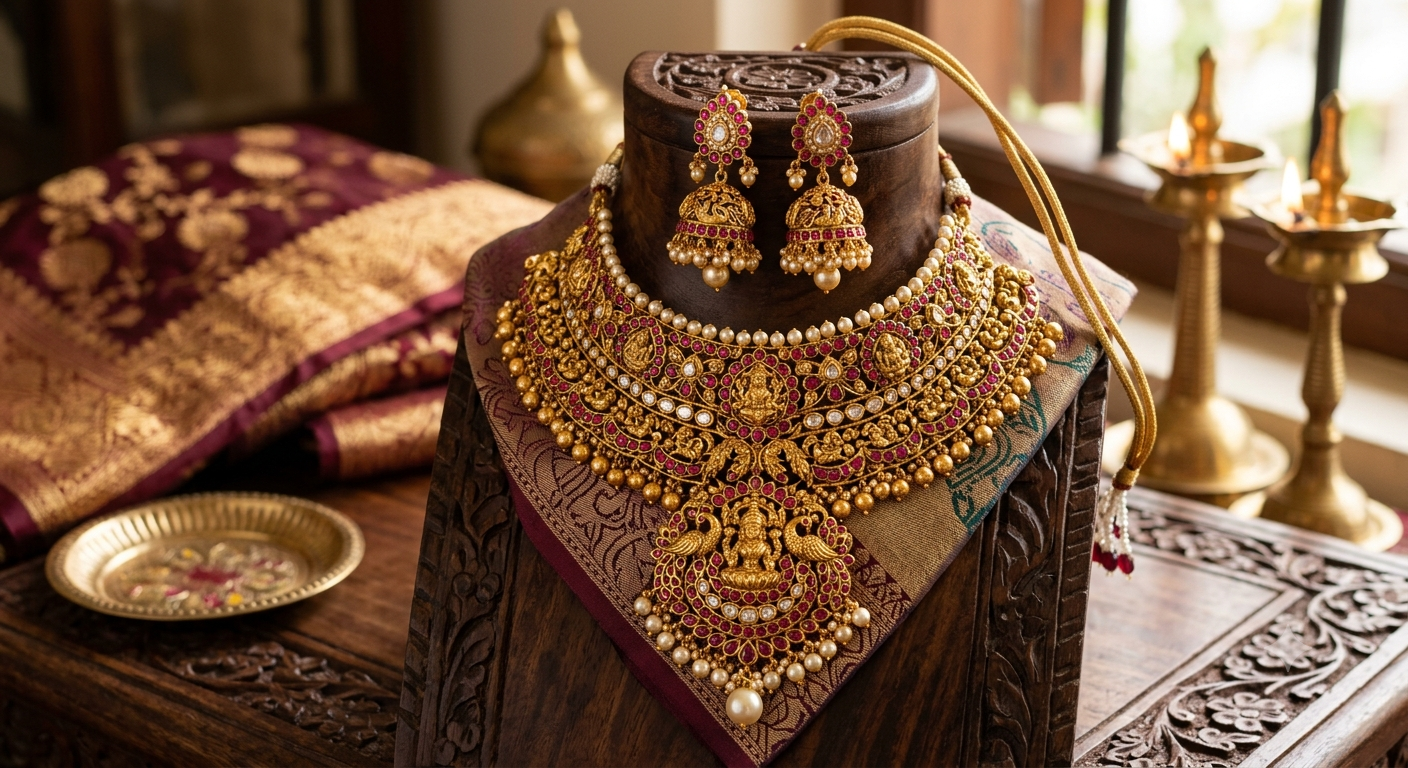
Popular Traditional Necklace Set Styles
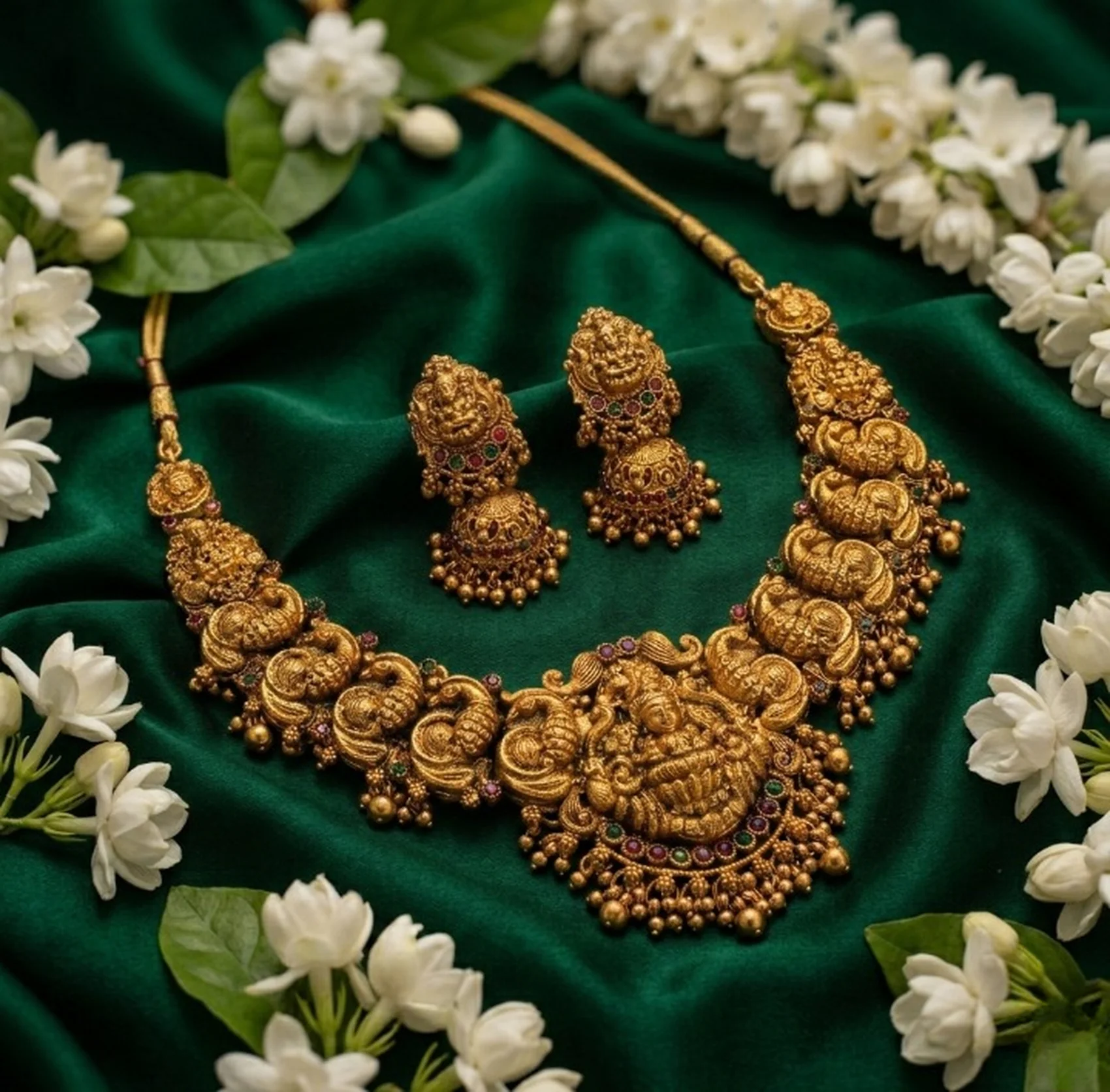
Temple jewellery is known for traditional motifs inspired by Indian art and religious or cultural imagery. Common designs may feature Lakshmi, peacock, floral, and other heritage-inspired motifs.These sets can work particularly well with silk sarees and traditional South Indian bridal or festive outfits.
2. Kundan Necklace Set
Kundan-style jewellery is recognised for its detailed stonework and royal appearance. A Kundan necklace set can be suitable for weddings, receptions, festivals, and other occasions where you want a more elaborate look.Pair it with a richly embroidered lehenga or saree while keeping the rest of the accessories balanced.
3. Traditional Gold Necklace Set
Gold jewellery remains closely associated with Indian weddings and traditional celebrations. Traditional gold designs can range from simple necklaces to elaborate layered pieces.For genuine gold jewellery, buyers should check purity, hallmarking, weight, making charges, and the seller's documentation before purchasing.
4. Traditional Choker Set
A choker sits close to the neckline and creates a strong focal point around the neck. It can work particularly well with suitable saree and lehenga necklines.If the choker is heavily detailed, consider wearing simpler earrings or other accessories to maintain balance.
5. Pearl Necklace Set
Pearls offer a softer and more versatile appearance. Pearl sets can be appropriate for festive events, family functions, and semi-formal occasions. Current Indian jewellery guides also highlight pearl sets as an adaptable option across different types of occasions.
How to Choose a Traditional Necklace Set
Choosing jewellery becomes easier when you consider more than just the design.
Consider the Occasion
First decide where you plan to wear the necklace.
For weddings:
Consider elaborate Kundan, temple, or traditional gold designs.
For festivals:
A medium-weight traditional set can provide an elegant festive appearance without being unnecessarily heavy.
For family functions:
Pearl, lightweight Kundan, or moderately detailed designs can be practical.
For regular festive wear:
Look for lightweight designs that can be reused with different outfits.The most suitable style depends on your outfit, comfort, personal taste, and the formality of the event.
Match the Necklace With Your Outfit
Your clothing should guide the jewellery choice.
For example:
Silk saree: Temple jewellery or traditional gold designs.
Banarasi saree: Kundan or gold-style jewellery.
Lehenga: Choker or layered necklace.
Anarkali: Medium or long necklace.
Simple saree: A statement necklace can become the focal point.
A useful approach is to coordinate with one or two important colours in the outfit instead of trying to match every colour exactly.
Think About the Neckline
The neckline can make a significant difference.A choker may work well with an open or suitable neckline, while a longer necklace can provide balance with deeper necklines. Medium-length necklaces can complement many saree blouse designs.Before buying, consider both the necklace length and how it will sit with the blouse or outfit.
Prioritise Comfort
A beautiful necklace may not be practical if it is uncomfortable to wear.For long wedding or festival events, consider:
Weight
Necklace length
Clasp quality
Adjustability
Earring weight
Skin comfort
For example, if you will be wearing jewellery for several hours at a wedding, a lighter coordinated set may be more practical than an extremely heavy design.
How to Style a Traditional Necklace Set
For a Wedding
Choose a statement necklace with matching earrings. If the necklace is elaborate, keep additional jewellery coordinated rather than adding too many competing pieces.A bridal look might combine a traditional necklace, earrings, bangles, and a maang tikka while maintaining a consistent design theme.
For a Festival
For Diwali, Navratri, or family celebrations, choose a traditional necklace that adds colour and elegance without overwhelming the outfit.A medium-sized Kundan or pearl set can work well with a saree or festive suit.
For a Silk Saree
A traditional gold or temple-inspired necklace can complement the rich appearance of a silk saree. Pay attention to the saree border and blouse design when selecting the jewellery.
For a Simple Outfit
A statement traditional necklace set can transform a relatively simple saree or kurta into a more festive look.For example, pair a plain silk saree with a detailed necklace and matching earrings, while keeping the remaining accessories understated.
Necklace Set Buying Checklist
Before purchasing a set, check the following:
1. Material:Understand whether you are buying genuine gold, gold-plated jewellery, an alloy piece, silver, or another material.
2. Purity and hallmarking:For precious-metal jewellery, verify applicable purity and hallmark information.
3. What is included:Check whether the price includes only the necklace or also matching earrings and other accessories.
4. Size and measurements:Check necklace length, width, and earring dimensions.
5. Weight:This is especially important for larger traditional designs.
6. Closure:Make sure the clasp or fastening mechanism feels secure.
7. Return policy:When shopping online, read the return, exchange and warranty terms carefully.
8. Seller reputation:Look at product information, customer reviews and business details before making a purchase.
Current jewellery buying guides similarly recommend checking exactly what comes with a set, along with dimensions, weight, finish, closure and adjustability.
How to Care for Your Traditional Necklace Set
Proper storage can help maintain the appearance of your jewellery.
Store the necklace separately from other pieces.
Keep it in a soft jewellery box or pouch.
Avoid direct contact with perfumes and harsh chemicals.
Wipe the jewellery gently after wearing it.
Keep pieces dry unless the manufacturer's care instructions say otherwise.
Store matching earrings and accessories together.
Avoid tightly folding large or structured necklaces.
For elaborate sets, keeping the pieces organised and stored appropriately can also help prevent scratches and tangling.
Frequently Asked Questions
Which traditional necklace set is suitable for a wedding?
A necklace set is a coordinated jewellery combination inspired by Indian designs. It commonly includes a necklace and matching earrings, although some sets contain additional pieces.
Which necklace set looks good with a saree?
Traditional gold, temple jewellery, Kundan and pearl sets can all complement sarees. Consider the saree fabric, colour, blouse neckline, and level of embroidery before selecting a design.
Can I wear a traditional necklace set with a lehenga?
Yes. Chokers, Kundan sets and layered traditional necklaces can complement lehengas, particularly for weddings and receptions.
How should I choose the necklace length?
Choose the length based on your neckline, outfit, and desired look. Try to ensure that the necklace sits comfortably without competing with the blouse or embroidery.
What should I check before buying a traditional necklace set online?
Check the material, purity where applicable, dimensions, weight, included pieces, product photographs, seller information, return policy and care instructions.
Conclusion
A set can be more than an accessory—it can bring together the colours, craftsmanship and elegance of an Indian outfit. From temple jewellery and Kundan designs to traditional gold and pearl sets, there are options for weddings, festivals, family functions and other special occasions.
The key is to choose a design that suits your outfit, neckline, occasion, and comfort. When buying online, pay attention to the material, measurements, included pieces, seller information, and applicable purity or hallmark details.
Nice jwellery araticel. to ead more info about this visit https://theeternalfacts.com/